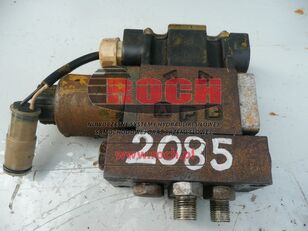
Гидрораспределитель для экскаватора Hyundai R360LC-7A R360-7A


Если вы решили покупать технику по низкой цене, убедитесь, что вы общаетесь с реальным продавцом. Узнайте как можно больше информации о владельце техники. Один из способов обмана – это представлять себя за реально существующую компанию. В случае возникновения подозрений сообщите об этом нам для дополнительного контроля, через форму обратной связи.
Прежде чем вы решите совершить покупку, внимательно изучите несколько предложений по продаже, чтобы понять среднюю стоимость выбранной вами модели техники. Если цена понравившегося предложения намного ниже аналогичных предложений, задумайтесь. Значительная разница в цене может говорить о скрытых дефектах или о попытке продавца совершить мошеннические действия.
Не покупайте товары, цена которых слишком отличается от средней цены на аналогичную технику.
Не давайте согласия на сомнительные залоги и предоплаты товара. В случае сомнений не бойтесь уточнять детали, просите дополнительные фотографии и документы на технику, проверяйте подлинность документов, задавайте вопросы.
Самый распространенный тип мошенничества. Нечестные продавцы могут запрашивать определенную сумму аванса для «брони» вашего права на покупку техники. Таким образом мошенники могут собрать большую сумму и пропасть, больше не выходить на связь.
- Перевод предоплаты на карту
- Не вносите предоплату без оформления документов, подтверждающих процесс передачи денег, если во время общения продавец вызывает сомнения.
- Перевод на счет «доверенного лица»
- Подобная просьба должна настораживать, скорее всего, вы общаетесь с мошенником.
- Перевод на счет компании с похожим именем
- Будьте бдительны, мошенники могут маскироваться под известные компании, внося незначительные изменения в название. Не переводите средства, если название компании вызывает сомнения.
- Подстановка собственных реквизитов в инвойс реальной компании
- Прежде чем делать перевод, убедитесь в правильности указанных реквизитов и относятся ли они к указанной компании.
Контакты продавца

 +86 189 289...
+86 189 2896 5241


 Китай

 Китай


 Китай


 Китай


 Китай


 Китай


 Китай


 Китай


 Китай


 Китай


 Китай


 Китай


 Китай


 Китай


 Румыния, Maramures


 Польша, Tarnowskie Góry
 Польша, Tarnowskie Góry
 Польша, Tarnowskie Góry
 Польша, Tarnowskie Góry
 Польша, Tarnowskie Góry
 в WhatsApp
Product Overview
A 36‑ton excavator does not move casually. Every relocation needs a lowbed, permits and a scheduled window, and it costs real money before the machine digs anything. That makes pre‑mobilisation checks more valuable than they are on smaller units: a fault discovered at the new site has already been paid for twice, once in transport and once in downtime far from the workshop. The hydraulic block is one of the things that should be verified before a machine of this size is committed to a long job.
The R360LC‑7A and R360‑7A use this distributor to divide pump flow among boom, arm, bucket, swing, travel and auxiliary. Once spools and bores wear, the symptoms are consistent: the boom sags on a held bucket, the arm loses bite at the bottom of a cut, swing lands short, travel bogs under load. This OEM‑grade assembly replaces the block complete with fresh internals set to ‑7A values, so the worn unit comes off and the replacement fits the original port positions.
Core Advantages
1. Verified before mobilisation, not after
Fitting a tested block ahead of a long job avoids discovering the fault at a site hours from the workshop and a lowbed ride away from parts.
2. Force returns at the cutting edge
Renewed spools put pressure back into the arm and bucket, so a heavy machine uses its rated capacity instead of labouring.
3. Loads hold over the body
A sagging boom forces a re‑spot every pass. Restored retention keeps the bucket where it was placed.
4. Swing placement becomes consistent
Restored circuit isolation removes the double‑input habit that breaks cycle rhythm on a production job.
5. OEM build without the import premium
Equivalent clearances and tested settings at a fraction of original assembly pricing, with tiered pricing for fleets.
Manufacturing & Quality Control
Spool and bore pairs are machined to print tolerance, matched by size, and hand‑run‑in until full‑stroke movement is smooth without binding. Assembled blocks are flow‑tested circuit by circuit with relief and compensator values logged against ‑7A figures; out‑of‑window units are stripped and corrected. Blocks ship internally oil‑fogged, ports capped, and crated on foam.
Frequently Asked Questions
Q1: How do I confirm the block suits my machine without a part number?
A: Send clear photos of the existing valve, its tag, and the serial plate. On the ‑7A range, section count and porting identify the variant.
Q2: Can this be fitted at the workshop before mobilisation?
A: Yes, and that is the sensible sequence. Installation is most of a working day on a machine this size, including bleeding and pressure verification.
Q3: What symptoms indicate valve wear?
A: Boom drift on held loads, lost arm force, inconsistent swing placement, and travel that reacts to bucket load.
Q4: Can my existing block be rebuilt?
A: If the casting is sound and has never been rebuilt, a kit may restore it. Where several circuits leak, a complete assembly is usually the better route. Photos help us judge.
Q5: What hydraulic servicing accompanies installation?
A: Flush the system, renew filters, clean the suction strainer, refill with specified oil, and verify relief settings before production.
Q6: What is excluded from warranty?
A: Material and assembly faults are covered. Damage from dirty oil, water ingress, a spool forced against a bind, or reliefs altered outside specification is not. Photograph the crate before opening if damage is visible.